Living in Downtown Raleigh: Condos, Commutes & Culture
If you could swap a long car commute for a morning walk to coffee and an evening show, would you? If you are eyeing Raleigh’s urban core, you are not alone. Downtown offers a compact, walkable lifestyle with restaurants, museums, parks, and events at your doorstep. In this guide, you will learn how commutes really work, what the condo market looks like, and the due diligence that helps you buy with confidence. Let’s dive in.
Walkability is a daily perk. Blocks are short, sidewalks are active, and many daily needs cluster around Fayetteville Street, City Market, Moore Square, and Glenwood South nearby. You can walk to coffee, dinner, museums, and live music without moving your car. On weekends, seasonal markets and festivals bring extra energy and foot traffic.
Parks and green space are close. Moore Square and Nash Square sit within the grid, and Dorothea Dix Park is just south with broad lawns and skyline views. The city’s greenway network connects downtown to nearby neighborhoods, which makes casual biking and longer rides practical.
Culture anchors the area. The North Carolina Museum of Natural Sciences and the North Carolina Museum of History draw steady visitors and support daytime activity. The Raleigh Convention Center adds major events that boost vibrancy, though big event days can mean more noise and traffic.
Living downtown gives you options. Many residents combine walking, biking, buses, and occasional driving. Your best choice depends on where you work and your schedule.
If your office is within the core or adjacent neighborhoods, a daily walk or bike ride is realistic. Bike lanes and greenway connections help make short commutes easier. E‑scooters and bike‑share programs have operated at times, though operators and coverage can change season by season.
City and regional buses from GoRaleigh and GoTriangle serve downtown’s main corridors. Coverage and frequency are strongest along central routes. Raleigh Union Station near downtown provides Amtrak service and functions as a multimodal hub for regional travel.
Downtown is central to major arterials. Commutes to Research Triangle Park or suburban office parks typically range from about 20 to 45 minutes depending on time of day and your exact start and end points. Raleigh‑Durham International Airport is a relatively short drive from the core, and intercity buses add another option for trips beyond the Triangle.
Condos dominate the housing stock in the core. You will find mid and high‑rise buildings, plus a few loft conversions and pocket townhome projects at the edges. Many newer developments are mixed‑use, with retail at street level and residences above.
Unit styles vary by building and age. Older condos can offer lower entry prices but may have smaller floor plans and older systems. Newer buildings often trade at a higher price per square foot due to location, views, and amenities.
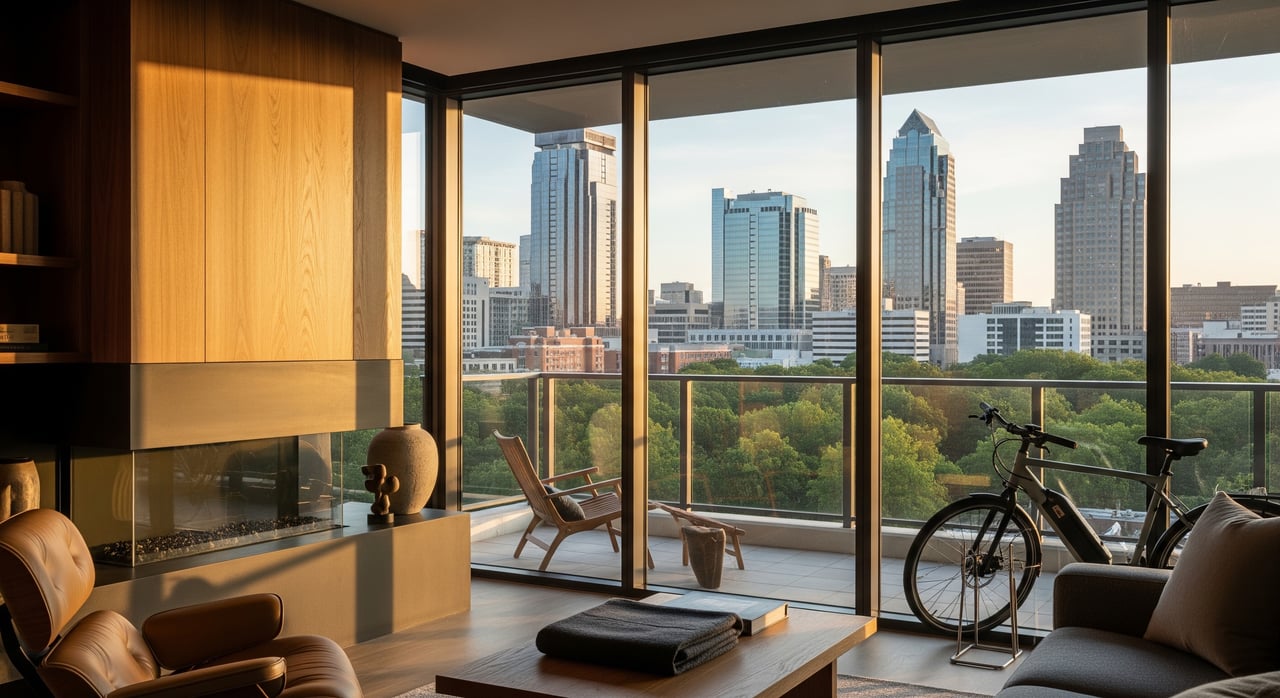
Floor‑to‑ceiling windows, balconies, and skyline views are common draws in taller buildings. Lobbies, secure package rooms, fitness centers, and concierge services appear in many mid and upper tier properties. Townhome options add private entries and sometimes attached garages, typically just outside the tightest downtown blocks.
Expect HOA or condo fees to cover building maintenance, common utilities, insurance, elevators, and shared amenities. These fees can materially affect your monthly budget. Higher‑service buildings with more amenities usually carry higher fees, so match amenities to how you live and what future buyers will value.
Parking is a key variable. Some units include assigned garage spaces while others require paid monthly parking or rely on nearby decks. Street parking rules and guest permits vary block by block, so verify exactly what comes with the unit and how many guest options you have.
Downtown life comes with tradeoffs. You get convenience and energy, but you also get nightlife noise, delivery traffic, and event crowds at times. Higher floors and interior‑facing units are often quieter, though views and premium levels can influence price.
Do your condo homework. Strong associations protect value and lending options, while weak finances can lead to surprises.
Safety and noise can change street by street. Review official police crime maps and local resources to understand patterns around a specific building and block. For environmental risk, check FEMA flood maps and Wake County GIS flood layers, since some parts of downtown can be affected by flash flooding. If a property sits in a designated flood zone, lenders may require flood insurance.
Downtown addresses fall within Wake County Public Schools, but assignment varies by address. Wake County also offers magnet and choice options that some families use. Always verify current assignment zones directly with the district before you sign.
Visit during different times and days. Listen for nightlife noise at night, watch traffic on event days, and try your commute during rush hour. Walk from the building to your daily needs to confirm that the route and timing work for you.
If you value walkability, condensed errands, and a social calendar within a few blocks, downtown aligns well. Professionals, grad students, empty‑nesters, and investors often see strong lifestyle or rental appeal. Families who prefer urban amenities can make it work by verifying school options, picking a quieter block or higher floor, and planning for parking.
If you prefer a larger floor plan, a private yard, and easy curbside parking, a nearby neighborhood may be a better fit. The good news is that downtown keeps you central to the region, so your commute to surrounding hubs is still manageable.
Set up tours that compare different building styles, ages, and amenity levels. Look at the lobby, elevators, hallways, and the garage, not just the unit. Ask about package delivery procedures, guest access, pet policies, and on‑site staff coverage. If you plan to rent later, confirm rental minimums and any short‑term restrictions.
Downtown Raleigh offers an urban lifestyle that is rare in the Triangle: walkable blocks, major cultural institutions, and a growing mix of restaurants and entertainment. Condos and townhomes give you choices across age, size, and amenity levels, but smart buyers look closely at HOA health, parking, and noise exposure. With careful due diligence, you can enjoy the energy of the city while protecting your time and budget.
Ready to walk through buildings, compare HOA packages, and pressure‑test the commute that fits your week? Schedule a friendly, no‑pressure consult with Steve Jourdain to map your downtown strategy and see what is on the market today.
Looking to buy, sell, or just have a question? I'm always available to help and would love to work with you.