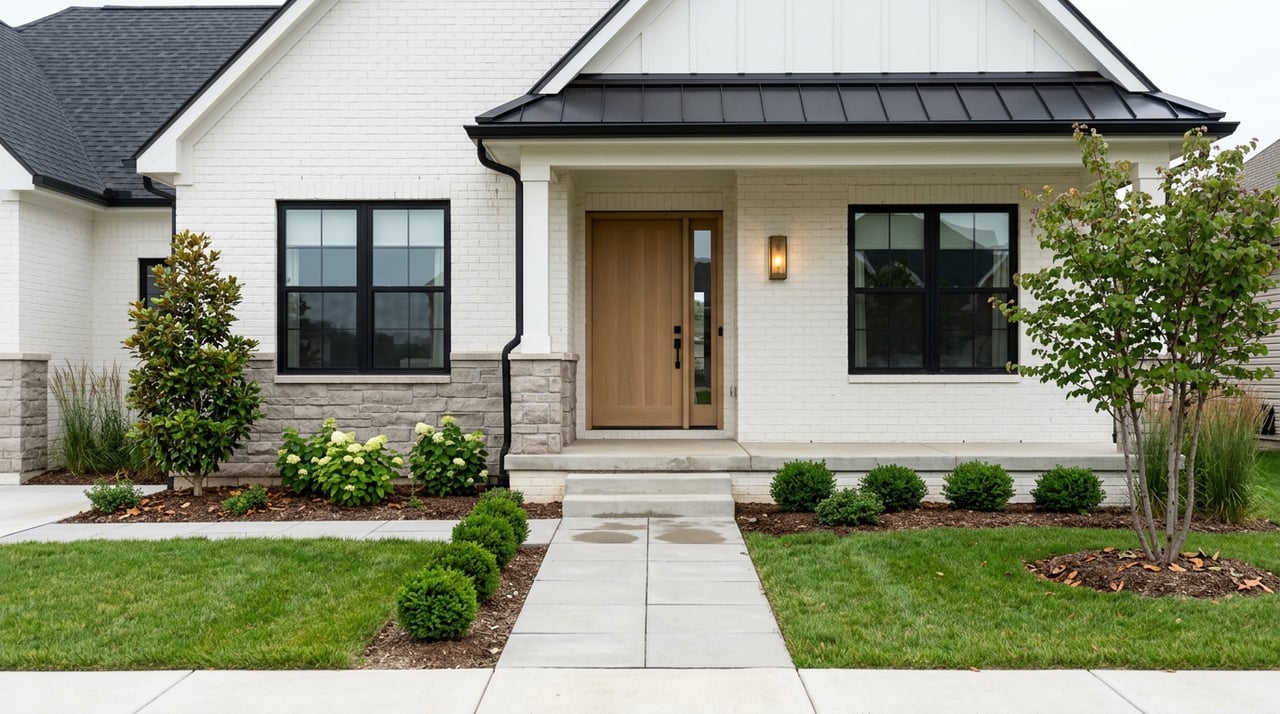
New Construction Neighborhoods Around Raleigh: What To Know
Buying new construction near Raleigh can feel simple at first. You tour a polished model, see a starting price, and imagine an easy path to move-in day. Then the real questions show up: How big is the lot, what does the HOA actually cover, how much will upgrades cost, and what happens if the timeline slips? If you are comparing new construction neighborhoods around Raleigh, this guide will help you sort through the details that matter most. Let’s dive in.
In the Raleigh and Wake County area, new construction is not one thing. As of May 2026, the market includes master-planned suburban communities, townhome-heavy neighborhoods, and higher-end projects in places like Wake Forest, Apex, Cary, and Holly Springs.
That is why it helps to compare more than price alone. In many communities, the better questions are who the builder is, how large the homesites are, what the HOA structure looks like, and how much of your final cost will come from plan choices and upgrades.
Looking at current public examples around Raleigh gives you a useful snapshot of what buyers are seeing right now. These communities also show why reading the fine print matters.
The Reserve at Prestleigh by D.R. Horton is planned for 257 single-family homes within 434 lots. Public community information shows five floorplans ranging from 1,764 to 2,824 square feet.
What makes this neighborhood especially useful as a case study is the HOA information. One public community page says there are no HOA fees, while a public listing for one homesite shows $75 per month in HOA dues and a 6,098-square-foot lot. That kind of mismatch is a reminder to verify details for the specific homesite you are considering.
Retreat at Friendship by M/I Homes is a larger community with 520 homes planned, including 260 townhomes. M/I states that the Signature collection sits on oversized lots, and the community page lists HOA dues of $105 per month.
Current listing data show homesites around 0.16 acres, or about 6,969 square feet. Public information also shows homes ranging from roughly 2,339 to 4,276 square feet, which gives buyers a wide spread in both size and likely final price.
Green Level Trail has a Cary location with an Apex mailing address, which is a good reminder to confirm both mailing address and jurisdiction when you are comparing communities. M/I describes this as a 203-home master-planned community with $100 per month HOA dues.
This neighborhood also advertises access to the American Tobacco Trail and a 10-year transferable structural warranty. Current listings show a townhome homesite at 2,613 square feet and a single-family homesite at about 0.19 acres, or 8,276 square feet.
Bridgeberry by Taylor Morrison represents the higher-price side of many Raleigh-area new construction options. Public community data show prices starting from $601,999 and home sizes from 2,484 to 3,550 square feet.
Amenities listed publicly include a pool, playground, and clubhouse. Public listing data also show lot sizes ranging from about 0.19 to 0.36 acres, with HOA dues around $125 to $138 per month depending on the homesite.
One of the biggest mistakes buyers make is treating the advertised price as the final number. In new construction, the base price is often only the starting point.
A smarter way to budget is to separate these categories:
Current Raleigh-area listings show how quickly these costs can climb. In Green Level Trail, a 3,660-square-foot home is publicly listed at $960,030, while a 4,009-square-foot home is listed at $1,066,650. In Retreat at Friendship, current examples range from $651,860 for a 2,339-square-foot home to $964,350 for a 4,276-square-foot home.
Those differences are not just about square footage. They also reflect plan changes, option packages, and finish selections that can push the all-in price much higher than the marketing headline.
Many planned communities in North Carolina fall under the North Carolina Planned Community Act. In practical terms, that often means mandatory associations, with the declaration and bylaws controlling assessments, rules, and enforcement.
For you as a buyer, the key point is simple: HOA terms are not always easy to understand from one listing page or one sales flyer. Public data can vary by homesite, and a community-wide summary may not tell the whole story.
Prestleigh is a strong example of this issue, since public sources show conflicting HOA information. Bridgeberry also shows different public HOA figures depending on the homesite. Before you write an offer, it is wise to ask for the recorded declaration, the current budget, and any master-association documents tied to that property.
Lot size can shape your day-to-day experience just as much as the home itself. It can affect privacy, outdoor use, maintenance needs, and how close neighboring homes feel.
The current communities around Raleigh show a wide range. You may see a townhome homesite around 2,613 square feet in Green Level Trail, a single-family lot around 6,098 square feet in Prestleigh, homesites near 6,969 square feet in Retreat at Friendship, or lots from about 0.19 to 0.36 acres in Bridgeberry.
That is why it helps to ask for the actual plat or lot details for the specific property, not just the model-home overview. Two homes in the same neighborhood can offer very different outdoor space and layout.
Many buyers assume every new home comes with the same builder warranty. In North Carolina, that is not the case.
North Carolina law does not require a builder to provide a one-year written warranty on a new home. NC REALTORS says standard new-construction forms commonly used in the state include a one-year Limited Warranty of Construction when those forms are used, and North Carolina also recognizes certain implied warranties for original buyers and latent defects.
On top of that, some builders advertise added coverage. For example, M/I Homes publicly advertises a 10-year transferable structural warranty at Green Level Trail. The important lesson is to review the actual warranty language for the home you are buying rather than assuming all coverage is identical.
The North Carolina Department of Justice also cautions buyers not to let a home warranty replace a real inspection and recommends attorney review of home-warranty contracts. That can help you understand what is covered, what is excluded, and how claims are handled.
If you need to move by a certain date, build timing deserves special attention. Completion dates in new construction are not always fixed.
Residential permitting and inspections are handled locally. Raleigh has its own permit process for new single-family homes, while nearby places may coordinate building-code review and utility work differently. That means permit review, utility coordination, or inspection timing can affect the closing schedule.
For buyers, the practical takeaway is to build in some flexibility. If your lease, sale, or relocation timeline is tight, ask detailed questions about where the home stands in the construction and approval process.
When you walk into a model home or on-site sales office, it is easy to assume everyone in the room is there to represent your interests. In North Carolina, agency disclosure should happen early.
State real estate disclosure rules require a broker to review the Working With Real Estate Agents disclosure at first substantial contact and determine who the broker represents in the transaction. For you, that means it is smart to understand representation before sharing confidential details about your budget, timing, or negotiating position.
That early conversation matters. It helps you know who is guiding the sale and how your interests are being represented as you compare contracts, upgrades, and builder terms.
If you are touring new construction neighborhoods around Raleigh, keep this checklist handy:
According to the North Carolina Real Estate Commission, brokers should ask the builder for the Certificate of Occupancy and provide a copy to the buyer or buyer’s agent. That is a useful checkpoint because it confirms the home has cleared the local approval process before closing.
For many buyers, the decision is not just which neighborhood to choose. It is whether new construction is the better fit than resale.
Resale usually gives you a fixed home and a quicker move-in timeline. New construction may offer more personalization, newer systems, and builder warranty language, but it also comes with more moving parts to verify.
In the Raleigh area, the biggest risks often come from assumptions. If you assume every HOA works the same way, every warranty is identical, or every model-home price reflects the final cost, you can end up surprised late in the process.
A careful comparison upfront can help you buy with more confidence. If you want help weighing new construction against resale options in Raleigh, Cary, Apex, Wake Forest, or Holly Springs, reach out to Steve Jourdain for clear, local guidance.
Looking to buy, sell, or just have a question? I'm always available to help and would love to work with you.