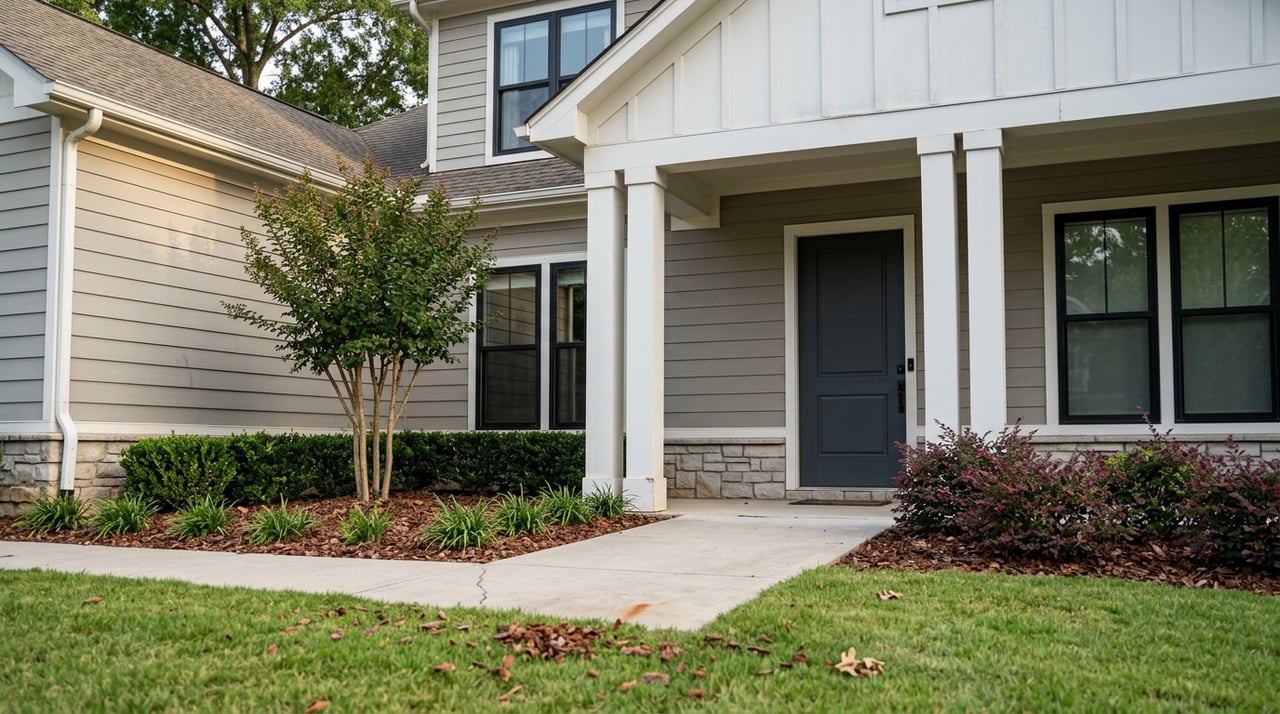
Cary's Median Home Price Is Hiding Two Different Negotiations
If you have checked Cary listings on more than one site this summer, you have probably noticed the story changes depending on where you look. One read says the market has cooled. Another says sellers are still calling the shots. Both are describing the same town, in the same season.
That is not a data glitch. It is two housing markets sharing one zip code, one school system, and one mailing address. Figuring out which one you are actually shopping in changes the entire negotiation, whether you are comparing a resale colonial in an established neighborhood or a new townhome a block from downtown.
Three separate reads on Cary, all covering overlapping windows within the last three months, tell three different stories.
| Source and window | Median price | Days on market | Year over year |
|---|---|---|---|
| Trailing 3 months ending May 2026 | $630,000 | 22 days (up from 15) | down 1.6% |
| Snapshot for June 2026 | $645,000 | 43 days | up 3.53% |
| List prices, August 2026 | $625,000 | — | down 1% |
One version shows prices softening and homes taking longer to sell. Another shows prices climbing with sellers still holding the advantage. A third shows list prices ticking down again heading into fall. None of these are wrong. They are measuring different slices of a market that is not behaving uniformly across its own inventory.
The tight read is coming from the resale side, and the numbers there are genuinely lopsided in sellers' favor. As of June 2026, Cary had just 572 homes on the market, down 11.18% from a year earlier, with only 1.04 months of supply available, a sharp drop from the 3.98 months recorded the prior year. Homes were closing at 100.12% of asking price, and more than a third of sales that month landed above the list price. That is the signature of established, single-family neighborhoods like Preston, Amberly, and MacGregor Downs, where turnover is slower and buyers are competing for a shrinking pool of listings.
The softer, slower read is coming from somewhere else entirely: a wave of new construction, much of it attached or multifamily, arriving through downtown Cary's redevelopment pipeline. That product is not competing directly with a 1990s brick single-family home in Amberly. It is answering a different kind of demand, and it is priced and absorbed on a different timeline.
The new supply is concentrated in a handful of named projects, and it helps to know what each one actually is:
That is a lot of new attached and multifamily inventory arriving at once, and none of it shows up in the resale months-of-supply figure that is currently squeezing single-family buyers.
Here is the mechanism that explains the gap. A homeowner selling a resale property in Amberly can simply wait for the right offer. A builder sitting on a finished or nearly finished home is paying carrying costs on it every day it stays empty, and that changes the incentive entirely.
Local pricing analysis this year has put new construction in Cary at roughly 10 to 20% above comparable resale, with typical absorption running 75 to 90 days, compared to 30 to 45 days for desirable resale listings. That extra time is exactly where builder incentives show up, in the form of rate buydowns, closing cost credits, or upgraded finishes thrown in to keep a project moving.
A homeowner can wait for the right offer. A builder is paying interest on an empty house every day it sits unsold.
That single difference in who bears the cost of waiting is why the same town can post a 1.04-month supply squeeze on one side and genuine negotiating room on the other.
If speed and certainty matter more to you than flexibility, expect established resale pockets like Preston, Amberly, or MacGregor Downs to move fast and close near or above list, consistent with the sale-to-list ratio recorded in June 2026. You should plan to compete, not negotiate.
If you want room to ask for a rate buydown or a finish upgrade, downtown Cary's new-construction corridor, from SOCA 56 and Walker Row today to whatever Flatiron and 7001 Weston eventually become, is where that leverage currently sits. Just budget for the premium that comes with it.
Carpenter Village, priced roughly in the $350,000 to $600,000 range, remains one of the more attainable entry points into an established Cary neighborhood, though its inventory is just as thin as everywhere else in town this summer.
Is Cary a buyer's market or a seller's market? Both, depending on what you are shopping for. Resale inventory is tight enough to favor sellers, with June 2026 figures showing 1.04 months of supply and homes closing at 100.12% of list. New construction, particularly downtown, still carries builder incentives that give buyers more room than the headline numbers suggest.
Does new construction always cost more than resale in Cary? On a price-per-square-foot basis, generally yes, at least at first. Recent local pricing analysis puts new construction at roughly 10 to 20% above comparable resale, though that gap tends to close as neighborhoods mature and resale values catch up over three to five years.
What's driving the new housing wave near downtown Cary? A combination of Fenton's continued build-out, which is approved for up to 920 dwelling units, and proposed projects like Flatiron and 7001 Weston, which together could add close to 500 more homes pending town approval. Add in active communities like SOCA 56, Walker Row, and Meridian Cary, and downtown Cary is absorbing a meaningful share of the region's new supply.
If you are trying to figure out which of Cary's two markets actually fits what you are looking for, that is exactly the kind of question worth working through before you make an offer. Steve Jourdain has spent years reading these micro-markets block by block across the Triangle, and can help you tell the difference between a listing worth competing for and one worth negotiating on. Schedule a Consultation to get a clear read on where your budget actually fits in Cary right now.
Looking to buy, sell, or just have a question? I'm always available to help and would love to work with you.