Chapel Hill Neighborhoods Guide for Your Next Move
Trying to choose the right Chapel Hill neighborhood can feel harder than choosing the house itself. You may love one area’s walkability, another area’s newer homes, and a third area’s easier commute. The good news is that Chapel Hill gives you several distinct options, and once you know what really separates them, the search gets much clearer. Let’s dive in.
When you compare Chapel Hill neighborhoods, it helps to focus on four practical factors: housing age and style, rules and restrictions, amenity access, and commute mode. Those are the clearest differences between in-town areas, planned communities, and mixed-use neighborhoods.
Chapel Hill also has a housing mix that continues to evolve. The town says it is adding more housing types, has enacted housing-choice amendments, and is working on a new land use framework in 2026 to support broader housing options and denser development near transit. That means your choices may look different depending on whether you want a historic home, a condo, a townhome, or a detached house.
Townwide pricing gives useful context, but not a perfect apples-to-apples comparison. Redfin reported a March 2026 median sale price of $495,000 with 65 median days on market, while Zillow’s December 2025 average home value was $615,307. Those numbers use different methods and timeframes, so they are best used as broad market context rather than direct neighborhood comparisons.
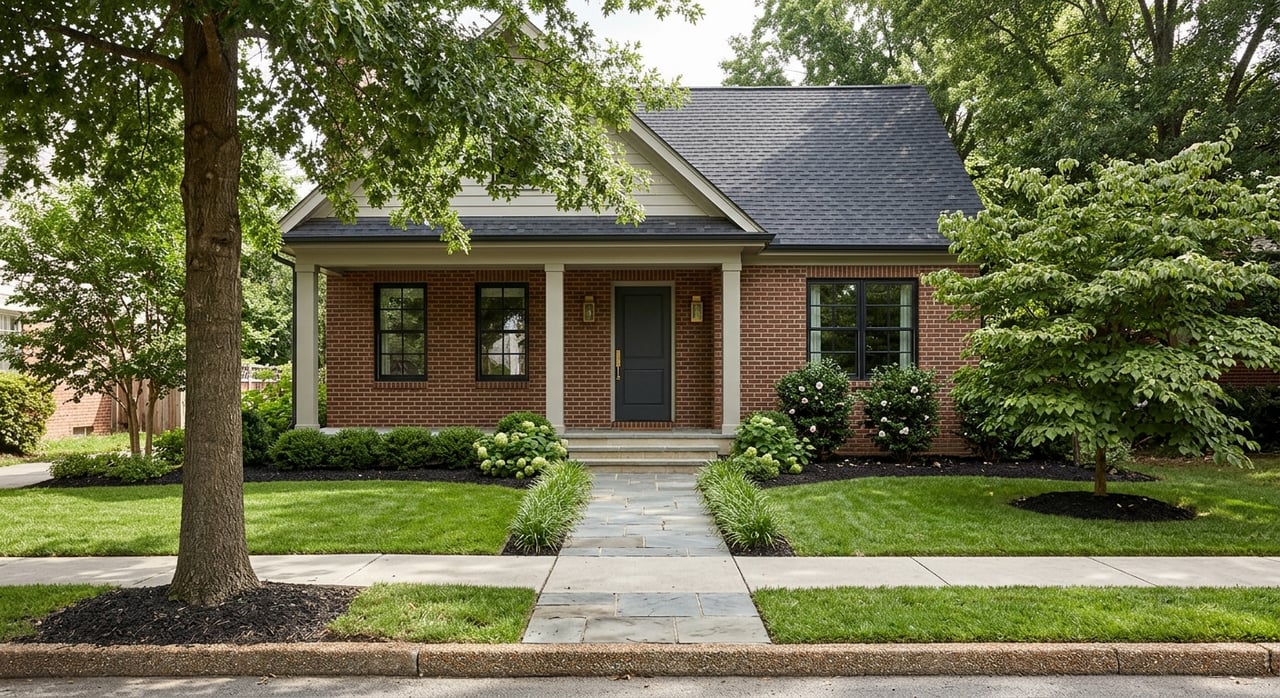
If you want to be close to downtown Chapel Hill, UNC, and some of the town’s oldest streets, in-town neighborhoods deserve a close look. These areas tend to offer the most historic character and some of the strongest walkability in town.
Chapel Hill’s historic-district records show that Franklin and Rosemary streets were among the earliest settled streets, with most early development completed by the mid-1920s. The housing stock includes Colonial Revival, Craftsman and Bungalow, Period Cottage, Minimal Traditional, Ranch, and Modern Movement styles.
For many buyers, that variety is a big part of the appeal. You may find mature streetscapes, distinctive architecture, and homes with details that are hard to replicate in newer construction.
Character often comes with added review requirements. Chapel Hill has three local historic districts: Franklin-Rosemary, Cameron-McCauley, and Gimghoul. In those districts, exterior changes require a Certificate of Appropriateness, while trees and landscaping do not require that approval.
The town also applies special protections in older residential areas through neighborhood conservation districts. Northside and Pine Knolls are examples. In Pine Knolls, standards affect items such as duplexes, floor area ratio, front-yard parking, and some garage-related notification requirements.
If you are considering an older in-town property, it is smart to look beyond the home itself. You also want to understand what changes may require review later.
In-town inventory can vary from older detached homes to condo options. Recent listings showed that range clearly, with a Franklin-Rosemary historic home listed around $795,000 and a Northside condo at 400 W Rosemary listed around $588,000.
Downtown Chapel Hill also gives a useful snapshot of the near-campus premium. Redfin reported a median sale price of $794,000, a median of $729 per square foot, and 36 median days on market in the latest sample. That same sample included only 2 sales, which is a reminder to treat short-term neighborhood data carefully.
If you want a neighborhood with a strong built-in sense of place, Southern Village stands out. It is one of Chapel Hill’s clearest examples of a mixed-use, New Urbanist-style community.
According to the official community information, Southern Village is less than 2 miles from UNC and includes 1,165 households, more than 60 local businesses, 90 acres of green space, a Village Green, year-round events, and housing options that include apartments, condos, townhomes, and detached homes.
That mix can work well if you want daily convenience without being in the middle of downtown. It gives you a neighborhood center feel, along with a range of housing types in one community.
Southern Village sits in a higher-end price tier, but it is generally more accessible than Meadowmont. Redfin reported a median sale price of $700,000, $328 per square foot, 26 median days on market, and a very competitive market profile, with 13 homes sold in May 2026.
That larger sales count also makes short-term numbers a bit more useful than in thinner submarkets. Even so, you should still read neighborhood stats as a snapshot, not a guarantee of what the next listing will do.
Southern Village is a multi-use planned community, which means buyers should expect another layer of community rules. HOA materials note that exterior changes for townhomes, including roof replacements, require review.
That is not necessarily a drawback. For many buyers, design oversight helps protect consistency. It simply means you should factor governance into your neighborhood decision, especially if future exterior changes matter to you.
Meadowmont is the other major planned community many buyers compare with Southern Village. If you want a broad amenity set and easier east-side access, it often rises to the top of the list.
Official community information describes Meadowmont as a 435-acre mixed-use community built in 1999. It includes row houses, traditional homes, cottage homes, condos, apartments, and a retirement community, along with walkable retail and services, trails, parks, ponds, and a YMCA pool.
For buyers who want a more complete mixed-use environment, Meadowmont offers a lot in one place. It also sits just off Highway 54 on the east side of Chapel Hill, which can be helpful if your travel patterns run toward Research Triangle Park or RDU.
Meadowmont’s market is tighter and more expensive than Southern Village’s in the latest available data. Redfin reported a median sale price of $1.25 million, $443 per square foot, and just 4 median days on market, along with a most-competitive rating.
That speed matters. If Meadowmont is your target, you may need to move quickly when the right property hits the market.
Like Southern Village, Meadowmont has its own design standards and covenants. Community guidelines cover features such as porches, decks, patios, and mailboxes.
If you value a more structured community look, this may feel like a plus. If you want maximum flexibility for exterior updates, it is something to review carefully before you buy.
Neighborhood fit is not only about the home. In Chapel Hill, transit access, greenways, and driving routes can shape your daily routine just as much as price or style.
Chapel Hill Transit provides more than 7 million rides per year, covers 62 square miles, serves 21 routes seven days a week, and has been fare-free for more than 20 years. The route map places Meadowmont on the N Route and Safe Ride G Route, Southern Village on the NS Route, Northside on the A Route, and UNC campus on most routes.
If you want to use transit regularly, route access should be part of your shortlist from the beginning. It can quickly narrow which neighborhoods fit your routine best.
The town says its greenway network is designed to help residents get to work, shops, and restaurants without a car. That makes trail access more than just an amenity. For some buyers, it is part of how they plan daily life.
This is where neighborhood differences become practical. In-town areas may offer stronger walkability and historic setting, Southern Village may offer the clearest village-center experience, and Meadowmont may offer the broadest mixed-use amenity package with east-side convenience.
If you are still deciding, use this simple framework to narrow your options:
Then ask yourself a few practical questions:
The best neighborhood is not the one with the most buzz. It is the one that fits how you actually want to live.
If you want help comparing Chapel Hill neighborhoods in a way that fits your budget, commute, and home style goals, connect with Steve Jourdain to schedule a consultation.

Looking to buy, sell, or just have a question? I'm always available to help and would love to work with you.